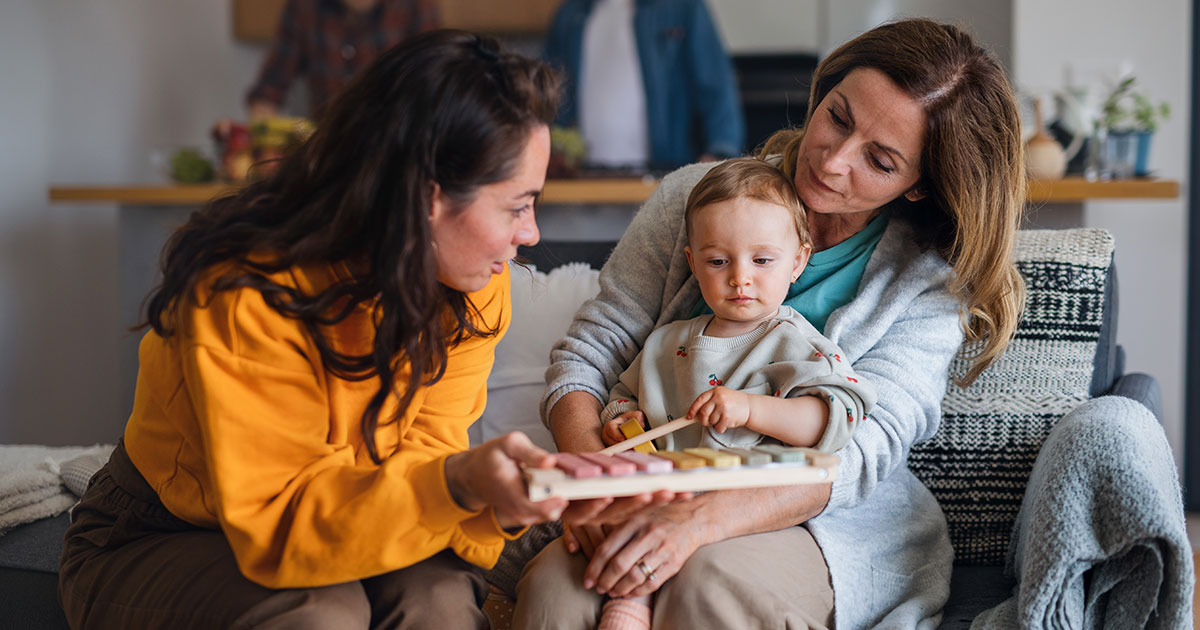
Home visiting brings trained parent educators into families’ homes, where they answer questions and connect caregivers to community resources.

Constance Gully
President and Chief Executive Officer, Parents as Teachers National Center
Raising a young child comes with countless questions, and families should not have to answer all of them alone. Parents may wonder whether their child is developing as expected, how to respond to a new behavior, or how to turn everyday moments into opportunities for learning. Often, what they need most is someone they trust to listen, share reliable information, and help them build on what they are already doing well.
That is the purpose of home visiting, and it is the role of the home visitor — often called a parent educator — to bring that support directly to families.
What a visit looks like
Home visiting is a voluntary service for families with young children. Parent educators meet with families regularly in their homes or another place where they feel comfortable. Over time, they build relationships that allow them to understand each family’s strengths, questions, and goals.
A visit might take place at a kitchen table, at a nearby park or library, or sometimes virtually if needed. With space to talk about their concerns, a parent may share that their toddler has started having more tantrums, is struggling with sleep, or is not using as many words as other children the same age. The parent educator listens, asks thoughtful questions, and helps the family make sense of their observations. Together, they may discuss typical experiences at that stage of development and identify simple strategies to try.
Connecting families to resources
Parent educators are also connectors. They may streamline access to healthcare, early intervention, child care, housing assistance, or other community resources. Because visits happen regularly, they notice emerging concerns and can help families take action early, remaining alongside them as they navigate unfamiliar systems. They also conduct regular health and developmental screenings, which might identify that a child is experiencing a developmental delay, like a speech or hearing difficulty, or that an adult is experiencing depression. With this knowledge, the family and parent educator can work together to form a plan of action and support.
Finding learning in everyday moments
Parent educators also help families recognize the learning already happening throughout the day. They often introduce an activity using items the family has at home, building confidence in the caregiver’s capacity to strengthen their child’s development. A cardboard box can become a sorting game. A favorite book can encourage a child to point, name objects, and learn new words. The goal is to offer practical ideas that fit into family life and support parents as they build the skills to help their child grow.
What the role requires
Being a parent educator requires knowledge of child development, but it also calls for curiosity, empathy, and a respect for the diversity of family experiences. Parent educators must be strong listeners who are comfortable meeting families where they are. They recognize that parents and caregivers know their children best and that every family has its own culture, experiences, and priorities. Their role is to work alongside the family.
A career built on trust
At Parents as Teachers, we have seen how meaningful this work can be for families and for the parent educators who serve them. A parent educator may be present when a child says a first word, takes a first step, or begins kindergarten ready to learn. They also witness when a parent feels heard, gains confidence, or realizes that something they’re already doing every day is helping their child grow.
Few careers offer the opportunity to build such meaningful relationships while helping parents and children thrive together. Home visiting is grounded in trust, respect, and partnership. For people who believe in the strengths of families and want to make a difference through personal, meaningful work, becoming a parent educator can be a powerful way to serve a community.
