
For current and aspiring special education teachers, extra training can pave the way to more impactful careers.
Estimated reading time: 4 minutes
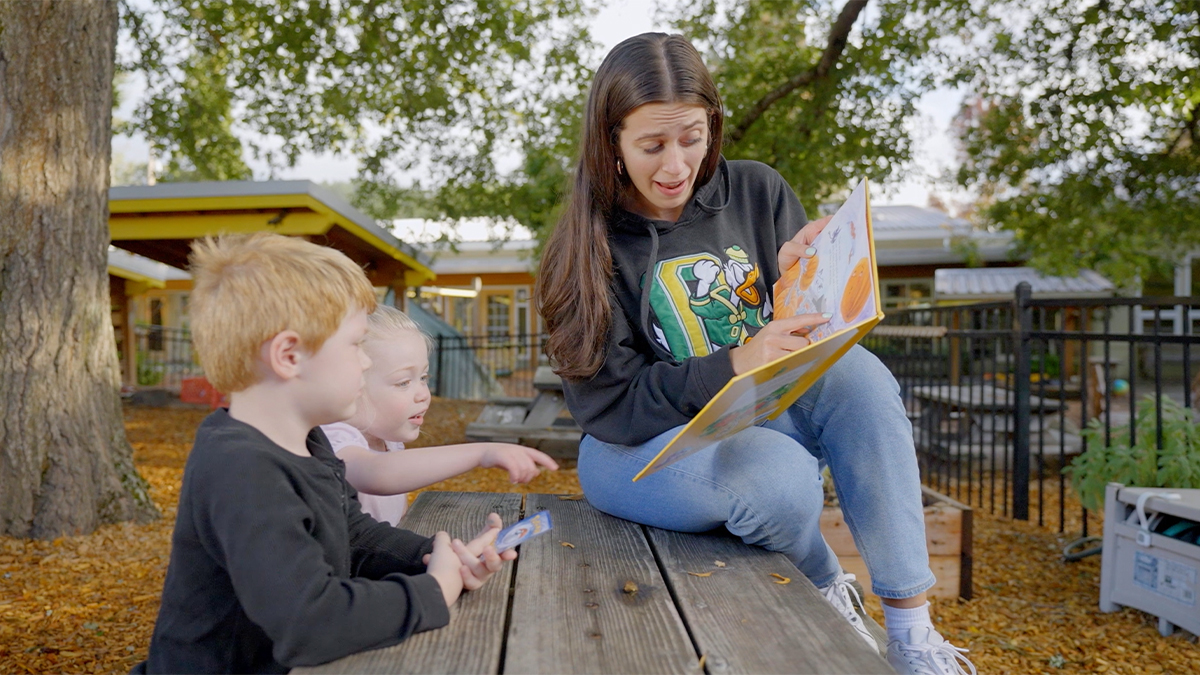
More than a decade ago, Alexis Bacon-Yates came to a realization that put her on a different path, and she’s never looked back.
“I became interested in working with children in need of additional support, after learners within my classroom showed signs of autism or other intellectual and/or developmental disabilities,” she said. “I felt there was a gap in our ability to comprehensively meet their needs, so I wanted to better equip myself.”
Gaining experience
Bacon-Yates decided to earn a Master’s in Applied Behavior Analysis (ABA) from the University of Oregon College of Education.
“My ABA degree provided relevant experience and a deep understanding of what I can do to understand the function of student behavior,” Bacon-Yates explained, “and what I need to do to shape those behaviors for an improved learning experience.”
The College also offers a Master’s in Early Intervention/Early Childhood Special Education (EI/ECSE), which helps professionals work with infants and children ages 5 and under. Both the ABA and EI/ECSE programs train students in current evidence-based practices for supporting young learners.
Finding her focus
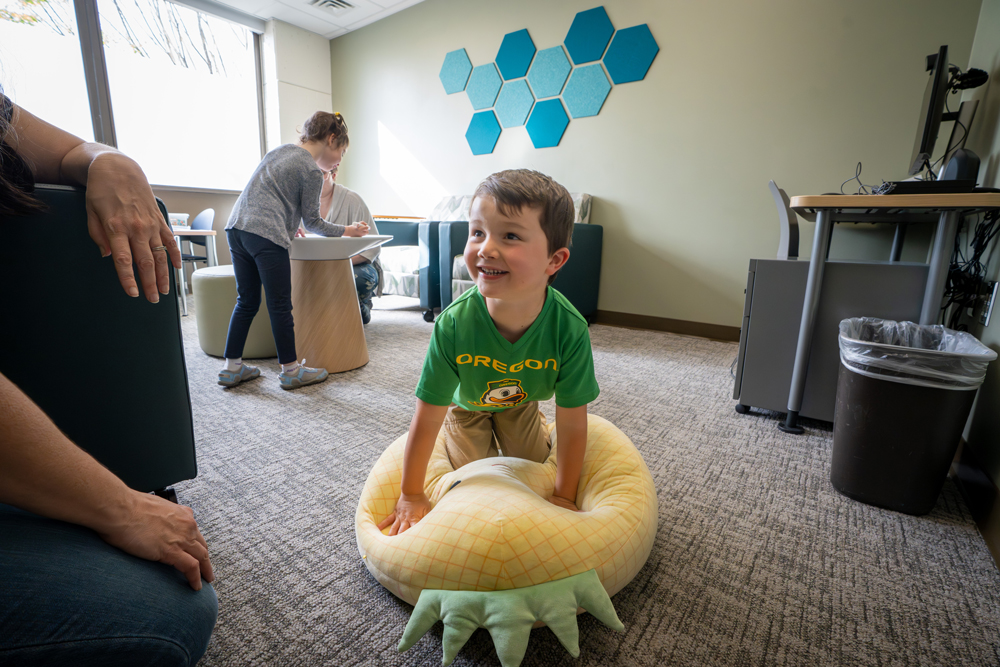
Currently the director at an inclusive preschool, Bacon-Yates is preparing to transition into an early childhood special education teaching position. She underscores the need for educators to seek evidence-based approaches that support diversity.
“This is a vulnerable population,” she said. “I find it deeply rewarding to play a role in advocating for students and their families. I’ve learned I’m most fulfilled in work that’s service-oriented, and focused on improving the lives of others.”
Shaping tomorrow’s educators
According to Kimberly Marshall, Ph.D., BCBA-D, program director for the University of Oregon’s master’s program in ABA, early behavioral intervention has been shown to be critical in helping support young children with developmental disabilities.
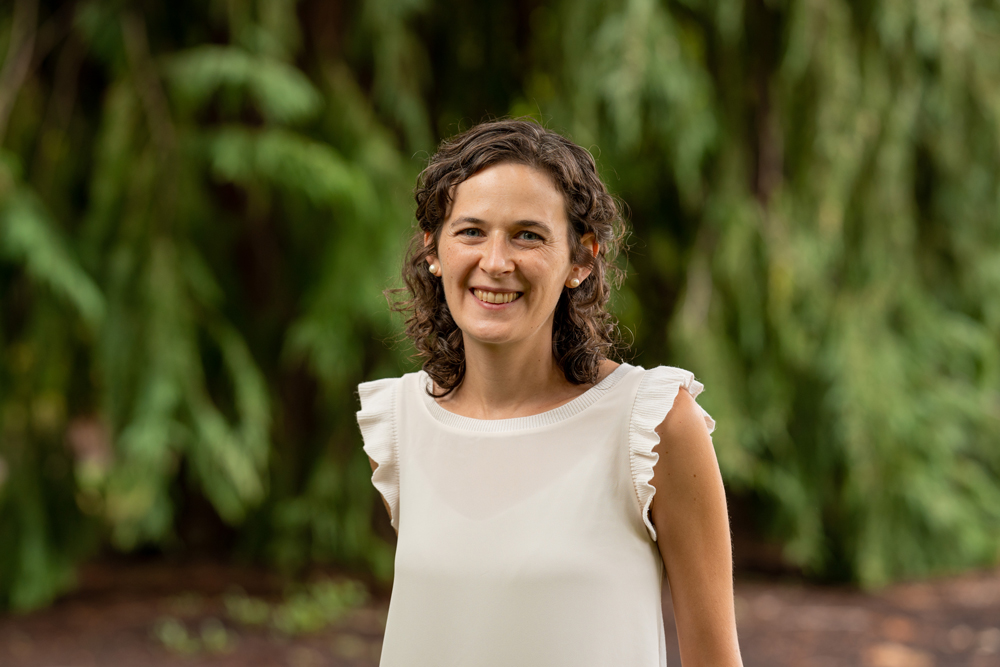
“Within the ABA and EI/ECSE programs, we prepare students to provide these essential educational opportunities to improve lifelong success and quality of life for their learners,” she said.
Dr. Marshall noted the majority of students who complete the master’s program in ABA are focused on becoming board-certified behavior analysts, who conduct functional behavior assessments and develop function-based behavior intervention plans for students with complex learning profiles. They also consult and train special education teachers and paraeducators who are working with these learners to ensure the students are consistently receiving needed support.
Distance learning
All courses in the ABA Master’s program are fully online, leveraging both synchronous and asynchronous activities, which opens the door for more educators to take advantage of what the program has to offer. The College’s EI/ECSE Master’s/Licensure program is also available online, making it convenient for early childhood paraprofessionals, educators, or educational assistants in Oregon who may be ready to advance in their careers and get their teaching license.
“Our students can participate in the program from any location, while still building community with their peers and program faculty,” Dr. Marshall said.
Leading the way
The University of Oregon’s Special Education graduate program has consistently been ranked No. 3 in the nation by U.S. News and World Report. Dr. Marshall is proud to contribute to this tradition of excellence.
“I’m fortunate to have been here from the start of the ABA program, allowing me to be a part of building our program from the ground up,” she said. “It’s exciting to support future special education teachers with developing strategies for setting up their students for success, and learning how to respond in evidence-based ways when challenges arise.”
