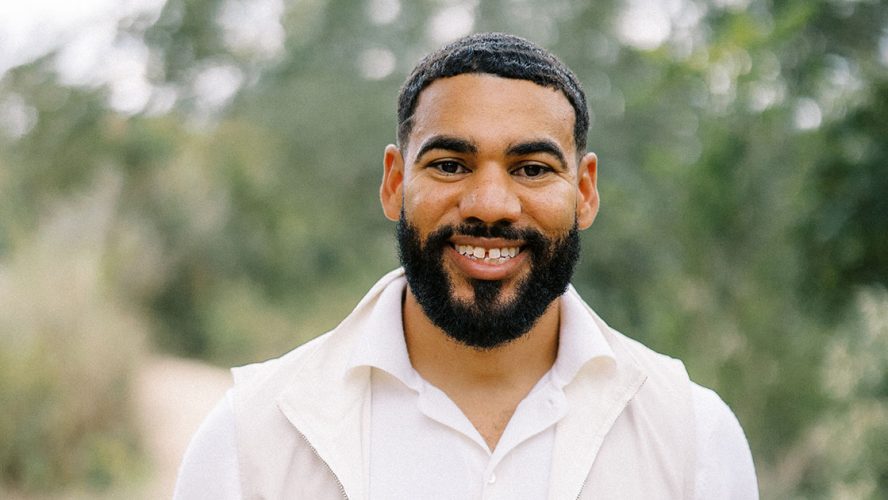
Spencer Russell, founder of Toddlers Can Read, explains why skill-building — not environment alone — is what turns struggling readers into confident ones.
What inspired you to create Toddlers Can Read?
As a child, I struggled with reading. I didn’t enjoy it, and it was stressful. Recently, I looked at my son’s spelling test on the fridge — he got 100%, with beautiful handwriting. He loves spelling and reading. He enjoys being asked how to spell challenging words.
I compared that experience to my own. When my mom practiced spelling with me, I cried. I sat on the steps and didn’t want to do it. I knew I couldn’t do it. I remember thinking, “Why can’t I read like my classmate?” Being a weak reader shaped how I saw myself as a student.
That experience followed me into teaching. I taught kindergarten and first grade in Houston through Teach for America for six years. I saw firsthand how being a struggling reader affects students, and how being a strong reader transforms their experience in school.
When I had my son, I didn’t want him to go through what I did. I wanted him to be confident, capable, and equipped with skills. I taught him to read at two. He read a full Dr. Seuss book before his third birthday.
That didn’t happen because he woke up wanting to read. At that age, kids want food, not literacy. But by four, he wanted to read independently. At five, six, and now seven, he still does. We actually have to take books away and say, “That’s enough reading time.”
You create that desire by building skill. Sometimes it’s fun, sometimes it’s not, but it’s necessary.

During COVID, I asked myself: Can the strategies I used as a kindergarten and first grade teacher — strategies that helped kids grow one, two, even three years in nine months — work for a 2-year-old? The answer was yes.
At that point, I had to choose between staying in my coaching job or becoming an entrepreneur. I chose the latter because parents need access to this knowledge. Teaching a child to read early isn’t for everyone, but many parents want to know how.
This has never been about showing off my child. It’s about holding up a mirror to parents and saying: Look at what you can do. Look at what your child is capable of.
How can the way adults model reading shape a child’s mindset about what learning should feel like?
I think adult modeling has very little impact on whether a child learns to read.
I grew up with a mom who was an avid reader. My siblings were strong readers. We had a big bookshelf. I come from an Ivy League family. None of that mattered because I couldn’t decode words. Until I built that skill, I didn’t want to read.
A lot of advice says, “Be seen reading. Model reading.” That sounds good, but it ignores that reading is a skill that must be explicitly taught.

Learning to read is like learning to drive. You wouldn’t tell someone to just watch people drive and expect it to click. I failed my driver’s test twice — almost three times — because no one taught me how to drive.
An enriching reading environment matters, but it’s not enough. If you want your child to read, one of three things must happen: a school teaches them well, you hire someone who teaches them well, or you teach them well. Kids won’t learn on their own, and they won’t learn by watching you.
Most people will tell you to “just model reading.” I’m the person parents come to when that advice fails. Parents arrive emotional and discouraged. I hear people on their worst days. Most parents get advice from social media or Facebook groups, and there are many bad resources. My goal is to pair resources with education and make as much as possible free. Parents shouldn’t have to buy anything to get their child reading. They should be able to learn, see examples, and confidently take the next steps.
What everyday habits help families create a sense of calm, confidence, and capability around learning to read?
Confidence comes from skill. If a child can’t swim, watching swimming videos or hearing encouragement won’t help once they’re in the pool; they’ll still sink. A struggling reader experiences the same panic when they see words on a page and think, “I can’t do this.”
We assume confidence comes from praise, routines, or exposure to books, but if a child already lacks confidence, there’s a skill gap that must be addressed.
Kids know they’re behind as early as kindergarten. I knew who the “smart kid” was in my class. That isn’t solved by environment; it’s solved by instruction.
I recommend a five-minute daily block: Identify the struggle, teach just beyond their current level, and progress step by step. This builds confidence in two ways: They objectively improve, and they experience momentum. They learn, “I didn’t get this before. Now I do.”
Confidence is the belief that you can figure things out. When kids see themselves mastering small reading skills, they begin to believe they can handle future challenges, too. Encouragement matters, but without skill-building, it falls short.
Many children shut down when they feel a word is “too hard.” How can adults create an environment where children feel safe trying, making mistakes, and building confidence through effort?
There are a couple of different pieces to it: time, place, and space. Time is a consistent time that works for both of you. Place is a set location dedicated to reading, ideally free of distractions. Space is the emotional energy you bring to the lesson.
You can have the same time and the same place, but the emotional space really, really matters. We need to come in calm and confident: “I can do this. My kid can do this.”
Routine is critical. The biggest fight is actually starting the lesson. When the routine is consistent — same time, same place, same space — resistance drops. Monday might be hard, Tuesday a little easier, and by Friday, we just sit down and do it.
The next piece is the instruction. It has to match the child’s level. If a child can only read two sounds and you ask them to read a five-sound word, it doesn’t matter how good your routine is; they’re going to keep shutting down. The work must be appropriately challenging, not overwhelming.
The last piece is teacher moves. Before the lesson, you name what’s coming: “During this lesson, you are going to get some challenging words. They’re going to be hard, and it’s my job to give you challenging words because that’s how you get better.”
During the lesson, you narrate effort: “That word was so hard. It had three sounds. You stayed with it. You kept trying. I’m so proud of you.” After the lesson, you debrief honestly: “Five words were hard today. You shut down on two, but you worked through three, and those three are going to be easier tomorrow.”

That’s a beginning, a middle, and an end. A pre-conversation, narration during, and a debrief after. If you get the routine right — time, place, space — match the instruction to the child’s level, and use those teacher moves before, during, and after, you address 90-95% of the confidence issues.
What helps children feel that learning to read is something within their reach, not something reserved for “smart kids?”
It comes back to building skill.
It’s easy to tell a child at home that they can do it, but when they get to school and see that they can’t, it falls short. Kids are smart. They compare themselves to others.
I see this most with older kids — fourth-graders reading at a second-grade level. They come home upset, sometimes in tears, because they see the gap between themselves and their peers.
In that moment, emotional support matters: “I know that’s really hard. I’m so sorry. No one should have to go through that.” That validation helps that afternoon, but it’s a Band-Aid. They’re going to go back to school and see the same thing.
What actually changes things is a plan that builds skill. I think it’s three pieces: emotional validation, being there in the moment; a clear plan, showing them how this will change; and skill-building, instruction that leads to real progress.
When kids see themselves improving, reading stops being something for “smart kids” and becomes something they know they can learn. They move from “I can’t do this” to “I didn’t get this before, but now I do.” That belief — that effort leads to progress — is what makes learning feel within reach.
