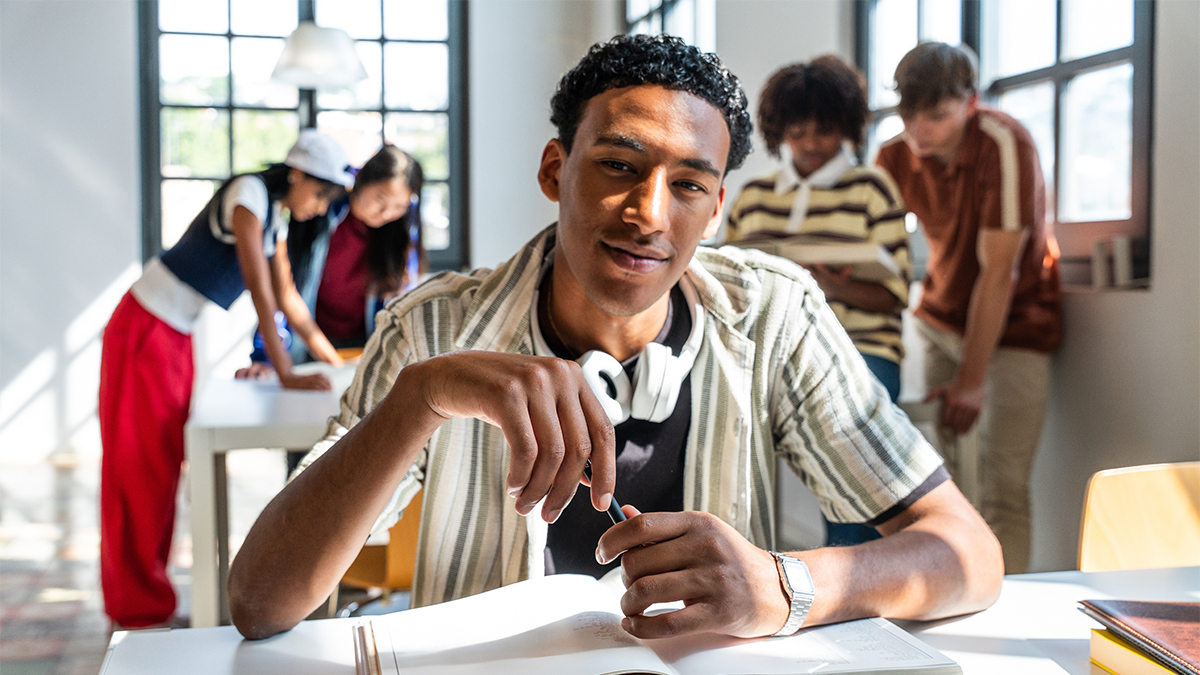

College success begins with confidence. For multilingual learners, confidence begins when families and educators celebrate and build on the strength their language skills already reflect.

Dr. Aliber Lozano
Head of Enhanced Products & Services, AVID Center
Families often focus on grades, courses, and college applications when preparing students for higher education. Yet one of the strongest predictors of whether students navigate college successfully is something less visible but deeply meaningful: the confidence they have in their ability to learn. My father often reminded me, “Lo único que les puedo dejar es una educación” — the one thing I can leave is an education. His words shaped how I understand the partnership between families and educators and how that partnership helps every student reach their full potential.
As a former English language learner myself, I know how powerful it is when young people feel capable, seen, and supported as they take on new academic challenges. Academic confidence develops over time, and families and educators play an essential role in strengthening it.
Building strength and confidence
For multilingual learners, confidence often begins with recognizing the strengths they bring to school. Students who navigate more than one language already demonstrate persistence, adaptability, and problem solving. When families highlight these strengths, students understand that multilingualism is a foundation they can build on, not a barrier. This belief matters when they encounter complex assignments or unfamiliar expectations in college.
Small moments in elementary, middle, and high school build confidence. This might include presenting in a second language, finishing a difficult reading, or revising assignments to show their best work. When learners see that effort leads to improvement, they internalize a powerful message: I can do challenging things. This sense of agency supports them when college, career, and life become demanding.
Educators spark moments that shape a student’s future by creating learning experiences that strengthen curiosity, confidence, and reflection. When classrooms normalize questions and celebrate progress, students gain space to practice new skills without fear of mistakes. As they feel supported and encouraged, they participate more, share their thinking, and learn to advocate for what they need. These habits help students navigate college, career, and life with greater agency and persistence.
Continuing curiosity at home
Families can strengthen these habits at home. Focusing on growth rather than comparison helps students stay motivated. Asking questions like “What part of this assignment felt challenging?” or “What strategy helped you understand this better?” builds awareness of the learning process. Routines that support reading, writing, and organization also create stability, especially for students balancing schoolwork in more than one language. And when families share stories of their own learning journeys, students see that struggle and progress are natural parts of education.
Belonging plays a powerful role as well. Students who feel connected to their community are more likely to take academic risks and stay engaged. Families can nurture this by encouraging involvement in clubs, study groups, or cultural communities where students feel affirmed.
A multifaceted effort
Academic confidence grows through practice, encouragement, and relationships that help students recognize their potential and persist through obstacles. Families and educators can work together to strengthen confidence early, so that multilingual learners move toward college, career, and life with the skills, resilience, and self-belief they need to thrive.
