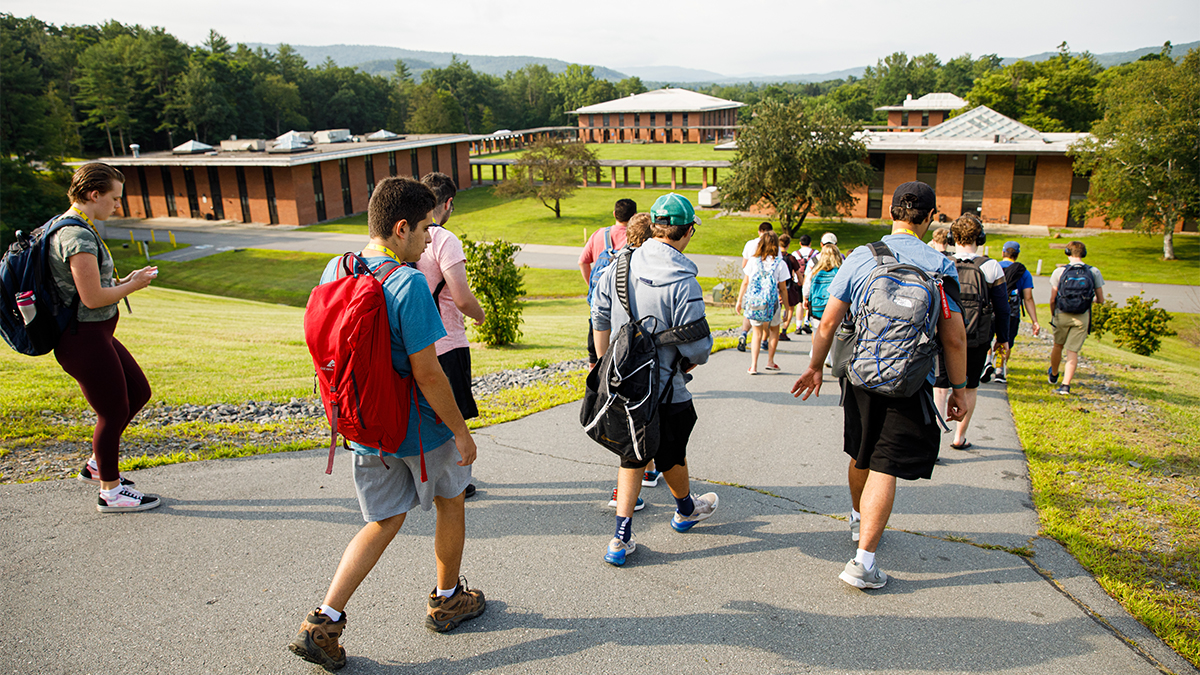

Here’s why summer may be the most important season in your neurodivergent student’s college journey.
For families of neurodivergent high schoolers, the college prep conversation tends to focus on the obvious: standardized tests, transcripts, campus tours. But the factor that most often trips students up in that critical first college semester has nothing to do with academics. It’s the sudden, dramatic shift in expectations around independence.
In high school, structure is largely provided. Teachers follow up on missing work. Parents manage schedules. School IEP and 504 plans assign responsibility for accommodations to adults. When a student arrives at college, all of that changes — and faster than most families expect. Under the Americans with Disabilities Act, which governs college accommodations, the responsibility for identifying needs, requesting support, and navigating systems belongs entirely to the student.
This is why self-advocacy — the ability to understand your own learning profile and ask for what you need — may be the single most important skill a neurodivergent student can develop before college. And building it takes time, practice, and low-stakes opportunities to stumble and recover.
Summer offers exactly that.
A summer experience that puts a student in a structured but genuinely college-like environment — living away from home, managing a daily schedule, sitting in actual college courses — does something that no amount of preparation from home can replicate. It reveals the gap between what a student knows how to do and what they can do independently. That gap, once visible, becomes something families and students can work on together with enough runway to actually close it.
What should families look for in a pre-college summer program? A few things matter most:
- The academic component should mirror real college expectations — not remediation, but courses that ask students to take notes from lectures, write to college standards, and manage assignments without being chased down.
- The social and residential component should be real: students need practice with the unglamorous logistics of independent living.
- The support should be intentional rather than invisible — students should leave with a clearer understanding of their own strengths and the strategies that work specifically for them.
Momentum can continue in the school year through dual enrollment, as students earn college credit in a supported environment. Online dual enrollment courses designed with neurodivergent learners in mind can give students a chance to build academic confidence and experience the rhythms of college coursework before they’re living on campus.
The goal of all of it isn’t to shield students from the challenge of college. It’s to ensure they’ve had enough experience navigating challenges and recovering from missteps, making the transition to college feel like a next step, not a cliff. Landmark College in Putney, Vermont offers pre-college programs for high school and graduating students designed around exactly these principles. With summer programs running in July and August, with Online Dual Enrollment continuing throughout the school year, Landmark’s pre-college offerings open doors of opportunity for students who learn differently.
To learn more, visit landmark.edu/precollege
