

Enrollment numbers have fluctuated over the past several years, but selective data largely ignores what drives Black students through their college enrollment and post-secondary education trajectory.
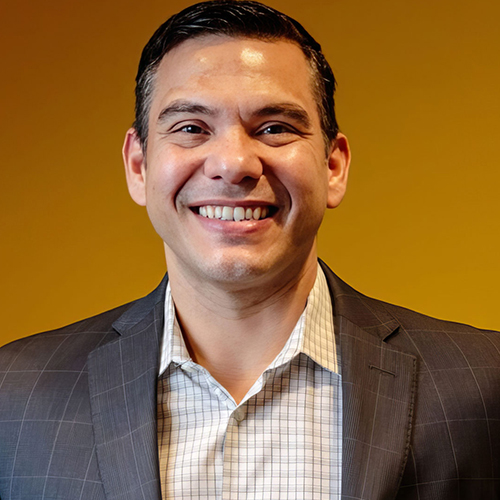
Wil del Pilar
Senior Vice President, EdTrust
Since the Supreme Court’s decision in Students for Fair Admissions v. Harvard (SFFA) in 2024, much of the conversation about Black student enrollment has focused on the most selective colleges. While understandable, that focus misses a larger story. National Student Clearinghouse data shows that the most significant changes in Black student enrollment are not just about selective admissions, but about where students are enrolling across the broader higher education system.
There are limits to the data. Enrollment patterns since 2020 have been shaped by the pandemic, FAFSA disruptions, and shifts in the labor market, creating volatility that makes year-to-year comparisons difficult. Still, trends since 2021 offer a useful view of where Black students are going.
Tracking the numbers
Across all institutions, Black undergraduate enrollment dropped sharply in 2021, declining by more than five percent as part of a broader pandemic-era downturn that hit community colleges and lower-cost institutions hardest. Enrollment stabilized in 2022, then rebounded in 2023 and 2024 before slowing in 2025.
That recovery has not been evenly distributed.
Public four-year institutions experienced modest declines in 2021 and 2022, followed by steady growth. After falling about three percent in each of the first two years, Black enrollment grew by roughly two percent in 2023, surged by more than seven percent in 2024, and continued rising in 2025.
Private nonprofit four-year institutions saw more fluctuation. Enrollment dropped sharply in 2021, recovered gradually in 2022 and 2023, increased significantly in 2024, and then slowed again in 2025. The spike in 2024 followed by smaller gains suggests that some of the recovery may have been temporary or shaped by financial aid changes, recruitment strategies, or admissions uncertainty.
Promising trends
The most concerning trends are at private for-profit institutions. After a slight decline in 2021, enrollment increased sharply for three consecutive years, including double-digit growth in 2023 and 2024, before slowing in 2025. This is troubling because research consistently shows that for-profit colleges often leave Black students with higher debt and weaker completion and employment outcomes.
Community colleges tell a different story. These institutions saw the largest drop in 2021, with Black enrollment falling by about eight percent. But they have also led the recovery. Enrollment held steady in 2022, grew in 2023, jumped by about 10 percent in 2024, and continued increasing in 2025. Community colleges are now the largest driver of recent growth in Black student enrollment.
Taken together, these trends point to a clear conclusion. Since 2021, Black enrollment has rebounded across most sectors, with the strongest growth at public, more affordable, and open-access institutions.
Factors driven by flexibility
This context matters when assessing the impact of SFFA. Focusing only on enrollment at a small number of highly selective colleges obscures the bigger picture. Higher education continues to sort students by cost, access, and opportunity, and public institutions enroll the largest share of Black students.
It is still too early to draw firm conclusions about the long-term effects of SFFA. The data reflects only the first admissions cycles under this new landscape and is shaped by multiple external factors. What is clear is that Black student enrollment has not collapsed, but it has shifted in ways that reflect broader pressures across higher education.
To fully understand these trends, we must look beyond selective institutions and examine the entire system. The real question is not only who gets in, but where students can afford to go and whether the institutions serving the most Black students have the resources to support them.
