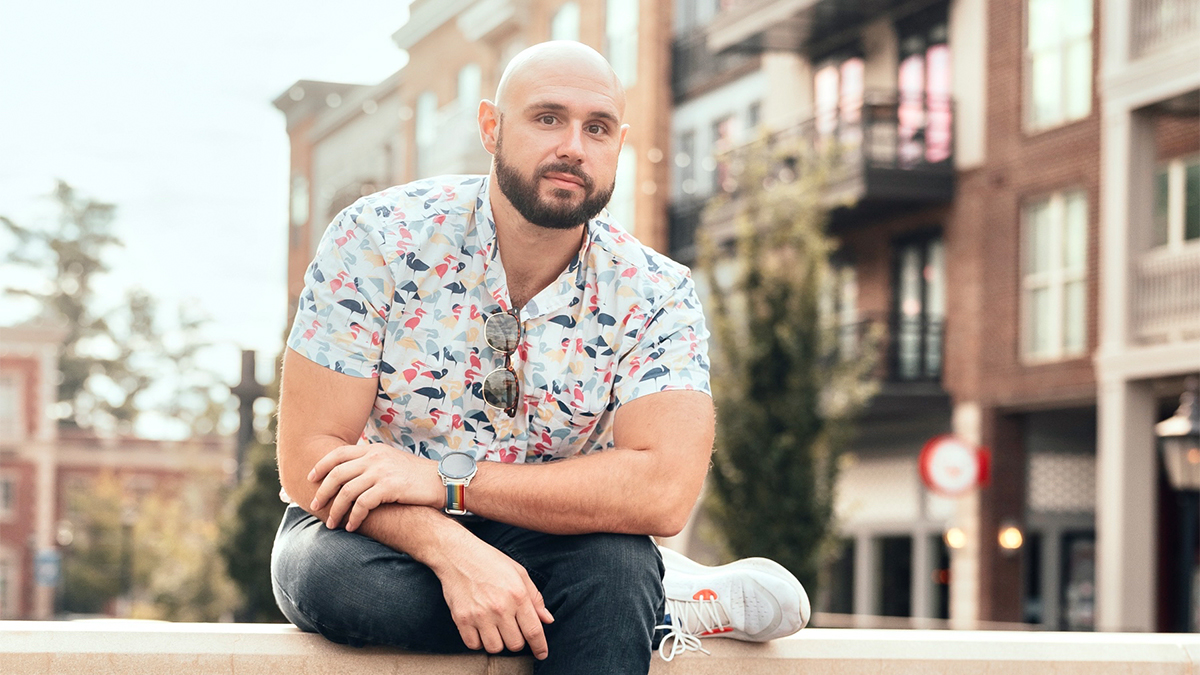
Atlanta-based lawyer Cody Randall is committed to democratizing legal advice — literally on the side of the road, with just a sign and his dog. His popularity is proof that law can be made accessible by meeting people where they are.
What originally drew you to pursue a career in law?
From a young age, I was often told I would make a good lawyer, largely because of my tendency to argue and challenge ideas. While that may have been said jokingly at the time, it ultimately proved to be a good fit. The legal profession gives me the opportunity to help people, and on a lighter note, it is one of the few professions that carries a certain level of authority and respect.
What’s something about becoming a lawyer that surprised you once you were actually in it?
What surprised me most is that practicing law is not just about legal knowledge. While the law itself is important, much of the job involves understanding people, their perspectives, and how they think. In many situations, success depends as much on perception and communication as it does on legal distinctions.
How would you describe the legal profession today compared to what people expect it to be?
Many people view the legal profession as overly complex and inaccessible, something only experts can understand. While it certainly requires expertise, the law is often more logical and understandable than people expect. It is not simple, but it is not as mysterious or complicated as it is sometimes perceived to be.
What skills do you think matter the most today that aren’t being emphasized enough?
Patience, empathy, and perspective are critical skills that are often overlooked. Being able to understand other people’s viewpoints and work collaboratively is essential. The legal process takes time, and outcomes are rarely immediate, so patience is key.
What made you start creating content around your experience in law?
I started creating content as a way to make legal information more accessible. Many people do not necessarily need a lawyer, they simply do not know where to start. By discussing broad, foundational legal concepts in an accessible format, I can help educate a wider audience. It allows me to engage with people, answer common questions, and make information available to anyone who might benefit from it.
How has building a personal brand changed your perspective on what a legal career can look like?
Building a personal brand reinforced that, in the legal profession, who you are and what you do are closely tied together. Like other professional fields, your identity becomes part of your work. Developing an audience has also shown how visibility can create a sense of authority and trust, shaping how a legal career can extend beyond traditional paths.

What advice would you give to someone who feels unsure about committing to a traditional legal path?
You can always change your mind. A legal career does not have to follow a single, fixed path, and many people enter the profession as a second or third career. Flexibility is important, and there is always room to pivot as your goals evolve.
How can young professionals better position themselves for opportunities outside of the courtroom?
You have to be willing to take chances and step outside of your comfort zone. Saying yes to opportunities, even when they are uncertain, is essential for growth. If something does not work out, you can always pivot to something else, but you cannot build experience without taking those initial risks.
What are some of the biggest challenges you think young lawyers are facing currently?
Many young lawyers are hesitant to take risks and are overly focused on finding a perfect job or career path. This can prevent them from gaining valuable experience. There is also a need to be more strategic about career decisions and to recognize the trade-offs between income and work-life balance. Understanding that you cannot have everything at once is an important part of long-term career satisfaction.
What does a “successful legal career” look like to you today?
To me, a successful legal career is defined by self-respect and the respect of my clients and community. It means advocating effectively, achieving the best possible outcomes, and being able to stand by the work I have done. It also involves being honest with clients, even when that means delivering difficult truths, and focusing on their best interests rather than simply their preferences.
