

Ashley Medeiros-Wiley
Senior Marketing Program Specialist, Altium
Engineering careers are shaping the future of artificial intelligence, electronics, embedded systems, and semiconductor technology. Yet women remain underrepresented across many of these fields. Creating a stronger and more diverse engineering workforce requires more than encouragement — it requires access to professional tools, practical learning experiences, mentorship, and clear pathways into industry.
Through its global education initiatives, Altium is helping students gain the skills and experience needed to pursue careers in engineering. Since 2022, Altium has provided software access and curriculum resources to over 300,000 students across 177 countries, including more than 1,700 participants in scholarship programs and 878 participants in the Women Scholarship Program, helping expand access to engineering education and career development opportunities.
Learning with industry tools
For many students, especially women in emerging markets, access to professional technology can be a barrier to pursuing engineering disciplines. Through programs like the Altium Student Lab, Global Scholarships, Women’s Scholarship Program, and Team Sponsorships, Altium gives students and educators access to the same PCB design tools used by professional engineers, along with curriculum resources and project-based learning experiences.

Karen Schultz
Senior Director of Education and Training Operations, Altium
“Through Altium’s Women’s Scholarship program, female students have the opportunity to design, build, and solve real engineering challenges while developing the confidence and technical skills needed to pursue careers in technology,” said Karen Schultz, Altium’s senior director of education and training operations. “It has been rewarding to see our scholarship recipients secure internships and jobs with the PCB design skills they developed in Altium’s education programs.”
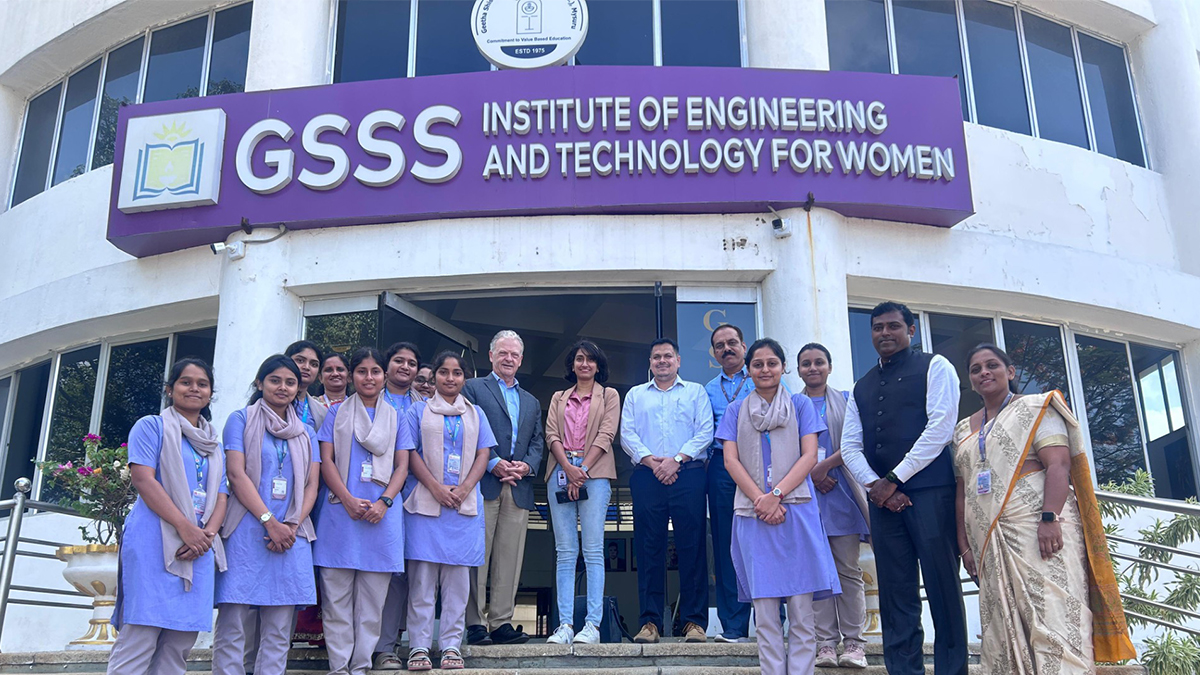
For students like Moksha Dechamma A V, access to professional design tools through the Altium Women’s Scholarship Program provides an opportunity to build practical skills that can be applied to real-world engineering challenges.

Moksha Dechamma A V
Second-year Electronics & Communication Engineering student, GSSS College Mysore, India
“The Altium Women’s Scholarship Program is a game-changer for women,” Dechamma said. “It gives us a chance to learn professional electronic designs, which is important because practical learning is more important than theoretical knowledge. Only when applied practically are we able to make innovations, make breakthroughs, and make technology accessible to one and all.”
Preparing women for engineering careers
As emerging technologies continue to transform the engineering landscape, employers increasingly seek graduates with practical experience and industry-ready skills.

Naomi Hamels
VP of Marketing, Altium
“Engineering innovation depends on diverse perspectives and experiences” said Naomi Hamels, Altium’s vice president of marketing. “By providing students and educators with access to professional design tools and meaningful learning opportunities, we can help ensure more women see themselves as future engineers and technology leaders.”
The impact of these programs can be seen in the opportunities students are able to pursue after developing PCB design skills through Altium’s education initiatives. Engineering student Simone Kwee credits her experience gained through the Women’s Scholarship Program as an advantage when pursuing internships.

Simone Kwee
Electrical Engineering Student, University of Pennsylvania School of Engineering and Applied Science, Philadelphia, Penn.
“Knowing Altium Designer is a big plus for employers and stands out on my resume,” Kwee said. “I had an opportunity to intern at Tesla, working with their Power Electronics team, and landed an internship with a medical device company working on PCBs for their heart pump.”
Supporting women in engineering
For educators, access to industry-standard tools helps students build confidence through hands-on learning.

Shayla Sawyer
ESCE Professor, Head Lab, Rensselaer Polytechnic Institute, Troy, N.Y.
“In electrical and computer systems engineering, we are at the intersection of many disciplines,” said Shayla Sawyer, an ESCE professor and lab director at the Rensselaer Polytechnic Institute in Troy, N.Y. “Everything has an electronic or data-centric backing. Altium Designer fits well in supporting our needs. Aligning design projects throughout our curriculum gives students confidence and pride in the circuits they create.”
As demand for engineering talent continues to grow, expanding access to education, professional tools, and real-world learning opportunities will be critical to building a stronger and more diverse workforce. By helping students like Dechamma and Kwee develop practical skills and confidence early in their careers, Altium is creating more pathways for women to contribute to the future of engineering and technology.
Learn more about programs for students and educators at Altium.com/education
