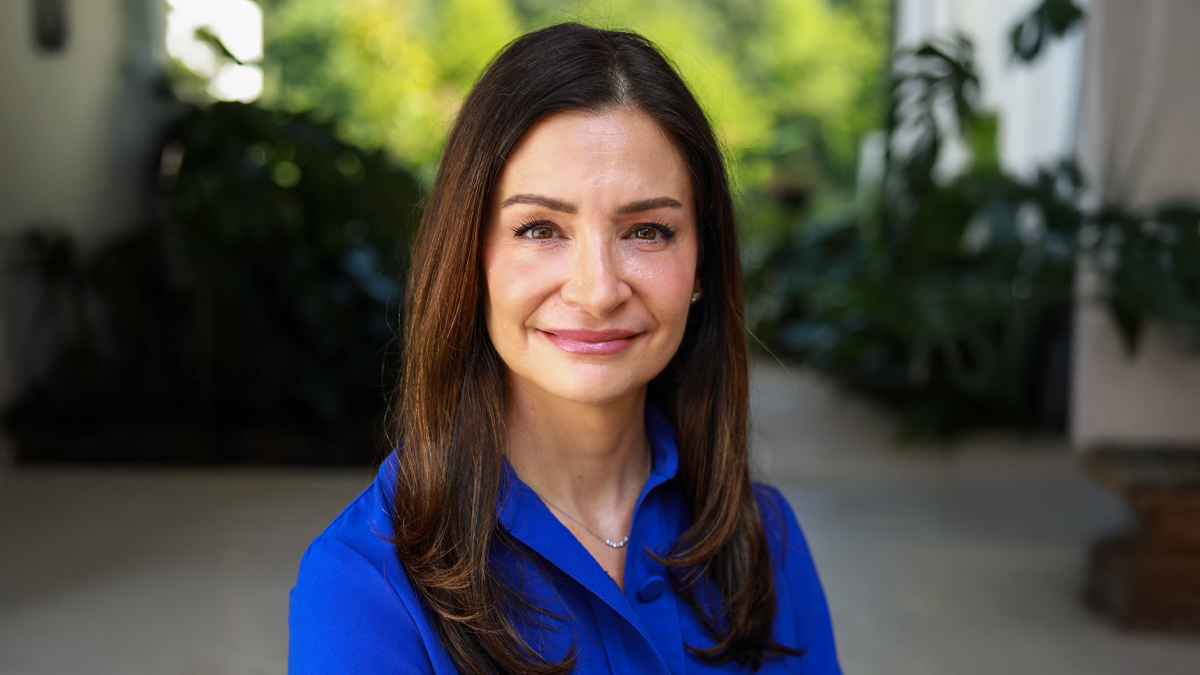
Dr. Ali Brown knows that pathologists make decisions that profoundly shape patient care. In her work and teaching, she shows both colleagues and students a future of care grounded in empathy.
Walking into a pathology lab for the first time, Ali Brown, M.D., FASCP, encountered a mastectomy specimen from a woman with breast cancer. She realized in that moment that while pathology is often invisible to patients, it carries immense responsibility in patient care.
“I saw the mastectomy specimen, and I had the thought, ‘That’s somebody’s breast.’ It really left an impression on me, that this is something really important. This specimen used to be part of someone, and now it’s my responsibility. The work that I do determines the diagnosis and directly guides this patient’s treatment,” Dr. Brown remembers.
Staying grounded in practice
Pathologists make decisions that profoundly shape patient care, and they do so while bearing the emotional weight of life-altering diagnoses. That sense of purpose drew her back to pathology again and again throughout medical school, even as she explored other rotations. While others stitched wounds, Dr. Brown found herself wanting to follow the specimen and to understand the story behind the disease.
Dr. Brown currently serves as the Interim Chief Executive Officer of the American Society for Clinical Pathology (ASCP), a global membership organization for pathologists and laboratory professionals. She also teaches medical students as a volunteer faculty member, and practices as a surgical pathologist, with subspecialty expertise in breast pathology. For Dr. Brown, staying connected to patients and learners is not optional — it is grounding.
Mentorship has been pivotal in shaping Dr. Brown’s approach to practicing medicine and leadership. World-renowned breast pathologist Dr. Aysegul Sahin modeled confidence and self-advocacy, showing Dr. Brown that women do not need permission to take up space. Equally influential was Dr. Kay Allen, a dedicated surgical pathologist who demonstrated that excellence does not require perfection. From her, Dr. Brown learned that it is acceptable, necessary, even, to pause, to acknowledge the emotional weight of the work, and to put things down until you can return with “fresh eyes.”
Intentional leadership and legacy
Being in a prominent leadership role, Dr. Brown is intentional about what she represents for the next generation of women. Women physicians, she emphasizes, do not have to choose between impact and flexibility, or between leadership and family. There is no perfect work-life balance — only priorities that shift over time — and self-compassion must be part of the equation.
Leadership requires risk, visibility, and resilience in the face of criticism, she says. Making connections with people is dear to Dr. Brown, and “getting yourself out there is necessary if you want to be a leader or get more involved in organized medicine on a national level. You can’t assume the opportunities will just come to you.”
Dr. Brown hopes her legacy will be one of possibility. She hopes to lead with authenticity and empathy to advance women’s representation in healthcare leadership and inspire others to envision expanded possibilities for their futures. In doing so, she continues the cycle that began with one welcoming mentor — opening doors, igniting sparks, and empowering women to step forward.
