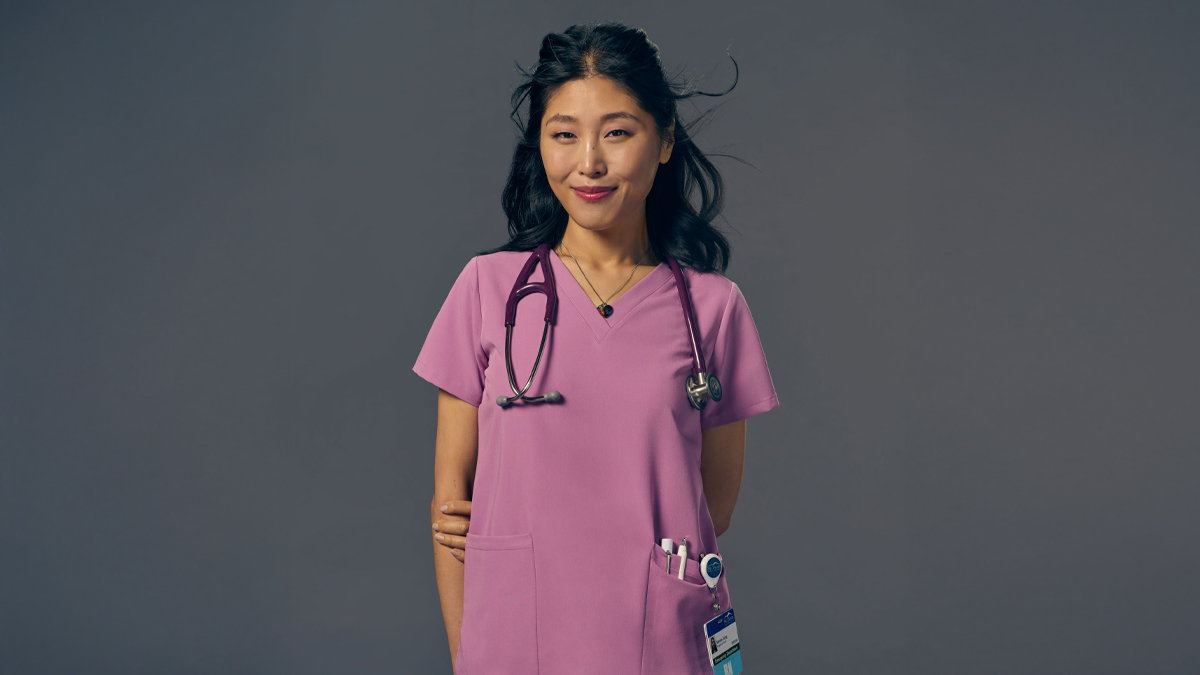
We spoke with actress Kahyun Kim about her role as nurse Serena on NBC’s medical comedy “St. Denis.” Bringing laughter into viewers’ homes and lightening the mood of a heavy profession is her goal.
Your role brings visibility to women in healthcare. What is it about Serena’s character that feels most authentic to you?
I grew up around hospitals because my mom was a psychologist in Korea, so that environment always felt familiar. Even there, most of the people I met were women. So, just seeing women on television — of different races, shapes, and sizes — feels important. Visibility matters. When you see someone who looks like you, or reminds you of a woman in your life, it does something.
I also love that Joyce, played by Wendy [McLendon-Covey], is our leader. It shouldn’t feel refreshing to see a woman in that kind of powerful position, but it does. Having a woman in a real leadership role reflects what healthcare actually looks like, and that representation is powerful.
How does storytelling help challenge stereotypes about women in healthcare?
One thing that was important to me is that Serena is really good at her job. She’s fun and has personality, but that doesn’t mean she’s not extremely professional. I think sometimes women get put in a box — you’re either competent and serious, or you’re fun and expressive. But you can be both.
As an Asian woman, it’s exciting to play someone who’s goofy and weird, and also a spectacular nurse. There are so many stereotypes, and it feels empowering to break them simply by existing fully in the role. Our writers do a beautiful job of showing that duality while keeping everything grounded in reality.
Your mother worked in healthcare. What lessons from her shaped you?
My mom is my hero. She worked in healthcare her entire life and cared deeply about her patients. When I was young, I saw how hard it was for her to leave work at work. As a working woman in Korea, she carried so much responsibility — professionally and at home.
Over time, she learned how to balance it. She still cared immensely, but she protected her personal life, too. Watching that shaped me. I struggle with balance as well. I can make work my whole life if I’m not careful. So, learning to separate it — work hard, but also come home and live — has been a huge lesson.
And honestly, having strong female friendships helps. That support system keeps you grounded.
How does it feel to have the opportunity to represent women in medicine?
I feel proud. I make it a point in interviews to say that Serena is excellent at what she does. That matters. Especially as a young Asian woman in this role, I want that competency to be clear.
The more I learn about nurses and healthcare workers, the more respect I have. We work with medical consultants to make everything specific and accurate, and even portraying it is hard. I can’t imagine doing it in real life. These women are saving lives. They deserve to be represented with care, strength, and complexity.
If Serena could offer one message to women in healthcare, what would it be?
It sounds cheesy, but: Work hard, play hard.
I’ve met so many nurses who watch our show. They work grueling hours. They’re caretakers 24/7. If we can give them even a small space to laugh or feel seen, that means everything.
They deserve leadership. They deserve recognition. And they deserve joy, too.
