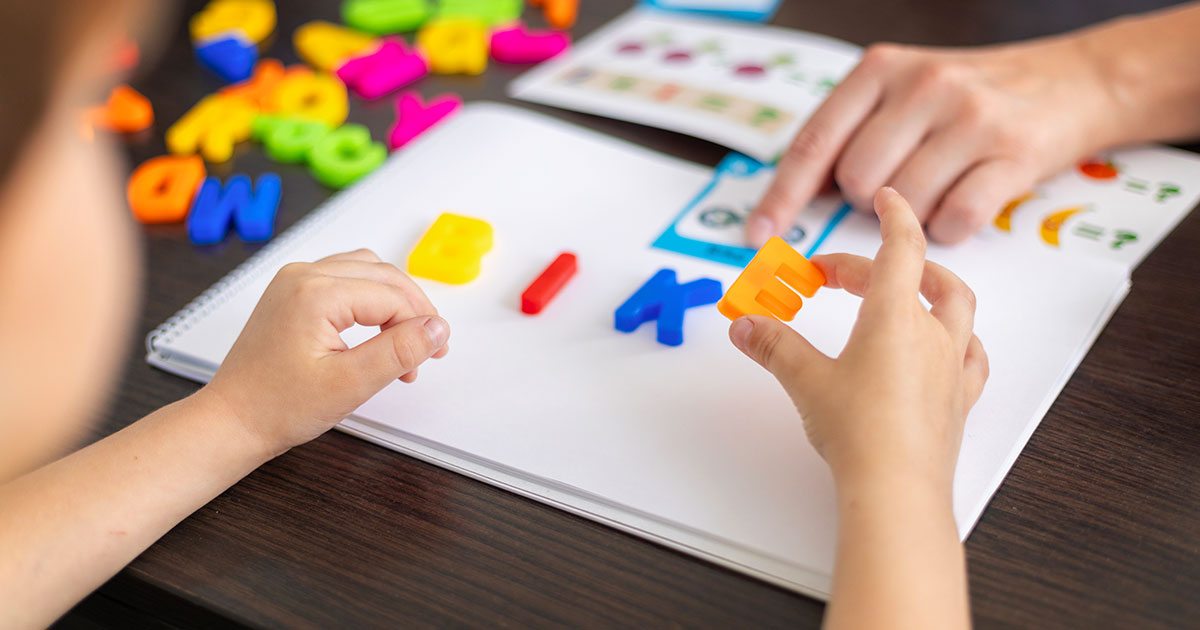
Sounding out words is just the beginning. From meaningful conversations to exploring interests together, building the multiple skills young readers need is important work.

Susan Friedman
Senior Director of Publishing and Content Development, National Association for the Education of Young Children
This article was adapted from an interview with Tanya S. Wright, coauthor of Literacy Learning for Infants, Toddlers, and Preschoolers: Key Practices for Educators | NAEYC
Carla was surprised by the results of her son Mason’s fourth-grade test scores: He was behind grade level in reading. In kindergarten, Mason had learned the alphabet. Throughout elementary school, he sounded out words and read aloud more smoothly. How could he be behind? While Mason had learned important literacy skills, Carla is not alone in her misunderstanding. Phonics is just one component of early literacy development.
Many are responding to the state of fourth-grade reading test scores by focusing on direct instruction in phonics. Often missing from the conversation are other key areas of early literacy, such as the meaning of print, understanding what you read, and children’s joyful engagement with letters and sounds through books, conversations, games, and songs. Families can support their children’s literacy development at home by fostering these six additional key areas of early literacy:
1. Oral language and knowledge
There’s a strong link between oral language and literacy development, which is why these two important keys are combined. Children need to develop their knowledge through both conversations and reading on a range of topics — farms, trucks, bugs, rhyming books, etc. — to understand ideas in the texts they read.
Try:
- Having meaningful and extended conversations with your child by using new, interesting words and asking open-ended questions.
- Having fun with language through rhymes and songs.
- Noticing and talking about the world you both observe, including science, nature, and history.
- Reading a range of books on topics that interest your child.
2. Knowledge development
Understanding concepts that help us interpret the meaning of a text is closely tied to oral language. The more children know about the world around them, the better equipped they are to understand what they read.
3. Print concepts
Print is all around, but children don’t automatically know how to navigate print and the pictures that go with it. They need this knowledge to become readers and writers.
Point out how books and print work, such as how to hold a book and track words while reading. Describe the distinct parts of a book (cover, title, etc.), and show how pictures help make sense of the text.
4. Text comprehension
Understanding what you read takes practice, and talking about whole books is important. Read aloud and discuss what you read. Once your child can read independently, ask them about what they are reading and keep talking about it.
5. Writing
Writing and reading are mutually supportive. Offer different writing materials — crayons, paper, pencils — at home. Talk about when you use writing, and include your child in meaningful writing experiences, like making grocery lists together. Write special notes or texts to family and friends.
6. Have fun
Reading and talking about the world and exploring interests together make for meaningful and enjoyable family time. Read, learn, talk, and sing together about what interests you and your child.
