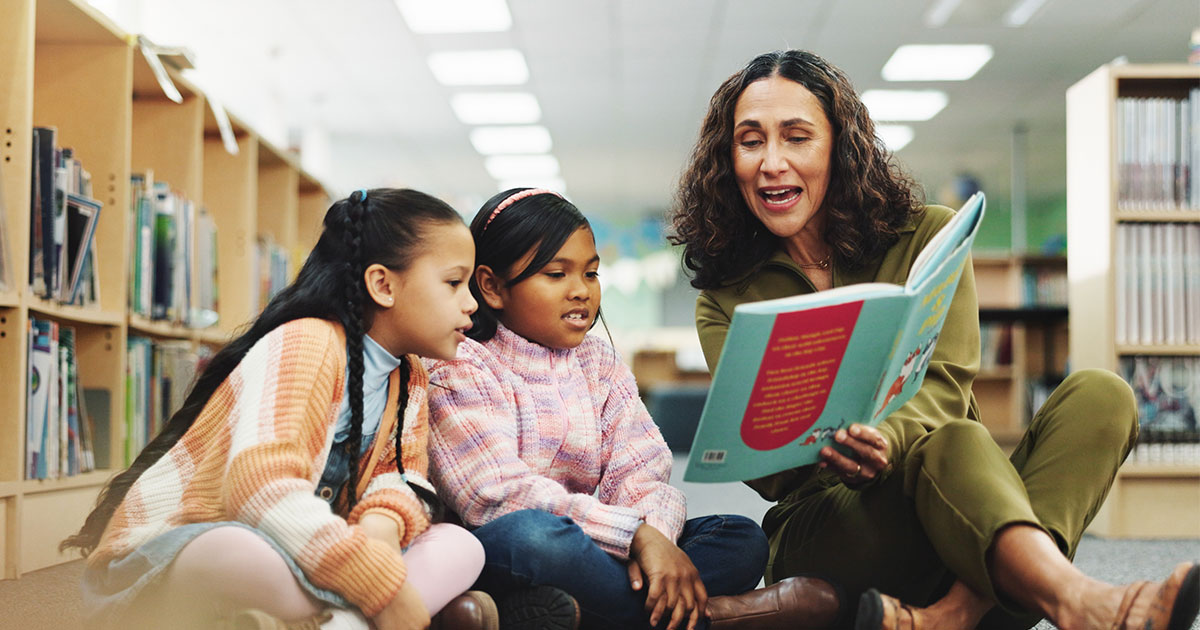
As we celebrate a nation built on learning and participation, libraries remain one of the most welcoming places where children take their first steps into both literacy and civic life.

Sam Helmick
2025-2026 President, American Library Association
From the very beginning of our country, leaders like Benjamin Franklin and Thomas Jefferson invested in libraries because they understood something fundamental: access to stories and information empowers people to learn, question, imagine, and contribute. Libraries were gateways to opportunity then, and they remain so now.
For many children, their first library card is also their first civic gesture. It is a small but meaningful agreement: I will borrow something we share, care for it, and return it for others to enjoy. In that simple exchange, children learn responsibility and community belonging, core elements of both literacy and civic participation.
Living stories, curious minds
Libraries themselves are living stories. They are places where children find books that feel like friends, where librarians answer big questions with kindness, and where curiosity is welcomed rather than rushed. Every story time, every graphic novel chosen with care, every whispered question at the desk becomes part of a child’s personal narrative. Parents often share that their child’s confidence grows not just from reading books, but from being in a place where their curiosity matters.
Early literacy programs reach beyond reading aloud. Through singing, playing with language, and exploring new ideas, children build the foundations for academic and social success. They also begin to understand stewardship: returning a book on time, helping choose titles for a display, or volunteering at a program shows them that their actions have an impact. These small steps teach young people that they are not just library users but also contributors.
Libraries also offer early, approachable lessons in leadership and service. Teen advisory boards, youth volunteers, and family-friendly volunteer programs invite children to see how communities make decisions. These experiences show them that civic participation isn’t mysterious or distant; rather, it is local, welcoming, and something they can shape.
A steady path forward
In a world where reading skills are slipping nationwide, these early opportunities to read, lead, and belong are more essential than ever. Recent data from the National Assessment of Educational Progress shows that only about 1 in 3 fourth-graders reads at a proficient level. Roughly 40% read below the basic benchmark, meaning millions of children are struggling with the foundational skills needed for future learning. In this landscape, libraries offer a steady, supportive path forward: places where children can grow their confidence, strengthen their literacy, and practice the small acts of responsibility that help them feel connected to their community and engage thoughtfully with others.
Libraries give parents, caregivers, and teachers a powerful, accessible tool to nurture curiosity, competence, and connection, helping children recognize their ability to influence the world around them.
Even as reading challenges rise nationwide, libraries remain steady by offering books, guidance, community, and the earliest invitations into civic life. By nurturing both minds and civic awareness, libraries help children grow into informed, compassionate, capable members of society.
Together, we are writing the next chapter of American literacy and civic engagement — one child, one family, and one library at a time.
