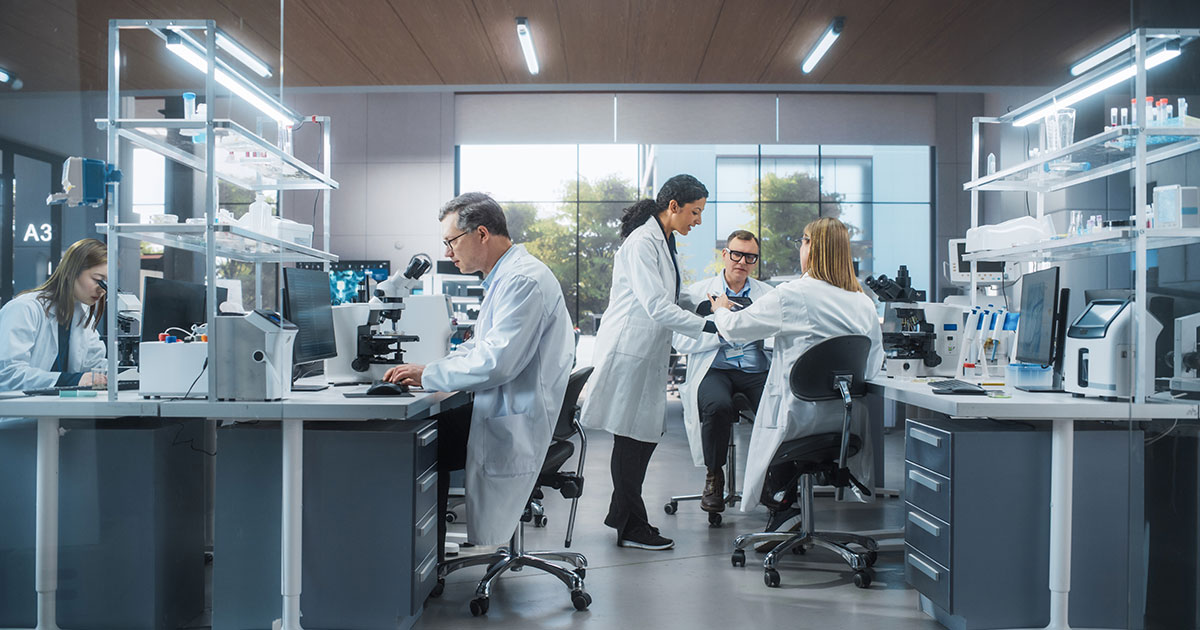
Today’s medicine is deeply rooted in the advancements of methods and technology within the field of medical research. From uncovering the causes of diseases to developing new therapies and preventive strategies, medical researchers connect the curiosity of science with the compassion of medicine.

Alvin Pham
Pre-Medical Committee, American Physician Scientists Association
Behind every statistic is a patient, and behind every breakthrough is a team of scientists, physicians, and others collectively working toward a healthier world. This diverse community in medical research gives rise to a range of specialized careers, each contributing to health innovation in unique ways. The following are some of the most impactful paths within the field.
Physician-scientists
Role: Combines clinical care with laboratory or clinical research. Physician–scientists investigate disease mechanisms, develop therapies, and translate discoveries from the bench to the bedside.
Education: Requires an MD/DO-PhD (about 8 years), followed by 3-7 years of residency and fellowship training. Or an MD/DO (4 years) with residency and research experience.
Impact: Bridge the gap between science and medicine by turning laboratory findings into real treatments. Their dual expertise enables them to identify and resolve clinical needs and lead interdisciplinary teams that directly improve patient outcomes.
Clinical research scientists
Role: Design and conduct studies to evaluate new treatments, diagnostics, and interventions in human subjects. They often work in hospitals, universities, or pharmaceutical companies, focusing on the safety and efficacy of medical innovations.
Education: Typically requires a PhD in biomedical sciences or clinical research (about 4–6 years) or an MD/DO (4 years) with research experience; postdoctoral training may add 2–4 years.
Impact: Advance evidence-based medicine by generating the data that guides clinical decisions. Their work ensures that new drugs, devices, and therapies are both safe and effective before reaching patients.
Public health researchers
Role: Investigate population-level health trends, disease prevention strategies, and policy impacts. Their work informs public health programs, pandemic response, and health equity initiatives.
Education: Typically requires a Master of Public Health (MPH) (about 2 years) or a DrPH/PhD in Public Health or Epidemiology (about 4–6 years).
Impact: Shape the health of entire populations through data-driven research and public policy. Their work reduces disease burden, addresses health disparities, and guides interventions that save lives on a global scale.
Medical anthropologists
Role: Study how culture, society, and behavior shape health and illness. They often work in global health, public policy, or academic research, analyzing medical practices across different populations.
Education: Typically requires a PhD in Anthropology or Medical Anthropology (about 4-6 years), sometimes preceded by an MA in anthropology (about 2 years).
Impact: Link the social and cultural factors and show how those influence health behaviors and care delivery. Their insights improve communication between healthcare providers and patients, fostering culturally sensitive and effective medical practice.
Biotechnology researchers and engineers
Role: Develop and test new biomedical technologies such as genetic therapies, diagnostic tools, or drug delivery systems. They work in academic, corporate, or government research labs, bridging biology and engineering.
Education: Typically requires a PhD in Biotechnology, Molecular Biology, or Bioengineering (about 4-6 years), though Master’s-level researchers (2 years) can enter industry positions earlier.
Impact: Drive innovation in medicine by developing new tools and technologies that transform diagnosis and treatment. Their discoveries enable personalized medicine and accelerate the development of next-generation therapeutics.
Medical research is not a single path or person but a network of disciplines united by a shared goal: to improve human health through discovery and innovation. Whether exploring cultural influences on health as an anthropologist or translating lab findings into clinical care as a physician-scientist, each role contributes a vital piece to the puzzle of modern medicine. Together, these careers form the foundation of scientific progress, turning questions into cures and curiosity into compassion.
