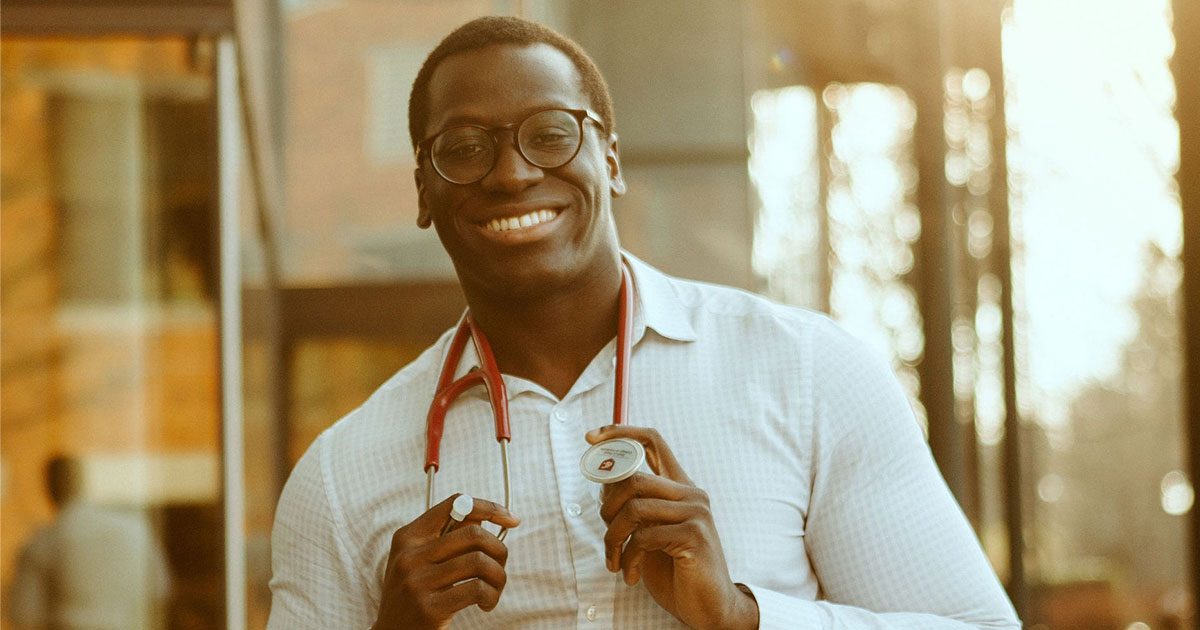
Driven by justice and representation, content creator Dr. Joel Bervell shares how his experiences and advocacy are reshaping equity, visibility, and empathy in healthcare.
What drew you to the healthcare profession in the first place?
What first drew me into medicine wasn’t a single “aha” moment but a series of experiences that made me realize how much inequity can be baked into our healthcare system. Growing up, I saw people in my family and community struggle with access to care. Sometimes it was in ways that were devastating but often invisible to the broader public. Later, when I entered medical school, I started to notice how those same inequities showed up in the very way we were taught. I remember vividly sitting in class learning about cyanosis, the bluish discoloration that signals low oxygen in the blood, and realizing the textbooks only showed it on white skin. So I raised my hand and asked, “What does this look like on someone who looks like me?” The professor didn’t have an answer. That moment stuck with me.
It made me realize that medicine isn’t just about memorizing pathways and lab values; it’s about whose bodies we study, whose pain we recognize, and whose stories get told. I didn’t want to just practice medicine; I wanted to help make it fairer, more accurate, and more reflective of the communities we serve. For me, becoming a doctor has always been about science and compassion, but equally about justice.
How do you see social media changing who gets inspired to pursue a career in medicine?
Social media has democratized access to role models in a way that traditional institutions never could. For decades, the image of a doctor was limited. It was narrow in race, gender, background, and even personality. If you didn’t fit that mold, it was hard to imagine yourself in a white coat. I often say, “You can’t be what you can’t see.” Social media has changed that.
Now, students scrolling online can see physicians who look like them, who speak openly about their struggles, and who challenge the same stereotypes they’ve internalized. They see doctors admitting that medical school is hard, talking about debt and burnout, or sharing the systemic inequities that once kept people out of the field. That kind of transparency is powerful because it breaks down the myth of perfection and replaces it with authenticity.
I’ve had students message me saying, “I didn’t think I could go into medicine until I saw your videos.” I’m just one of many voices. That tells me we’re building something bigger than ourselves — a new pipeline where young people are inspired not just by what medicine is, but by what it could be when people like them enter and lead.
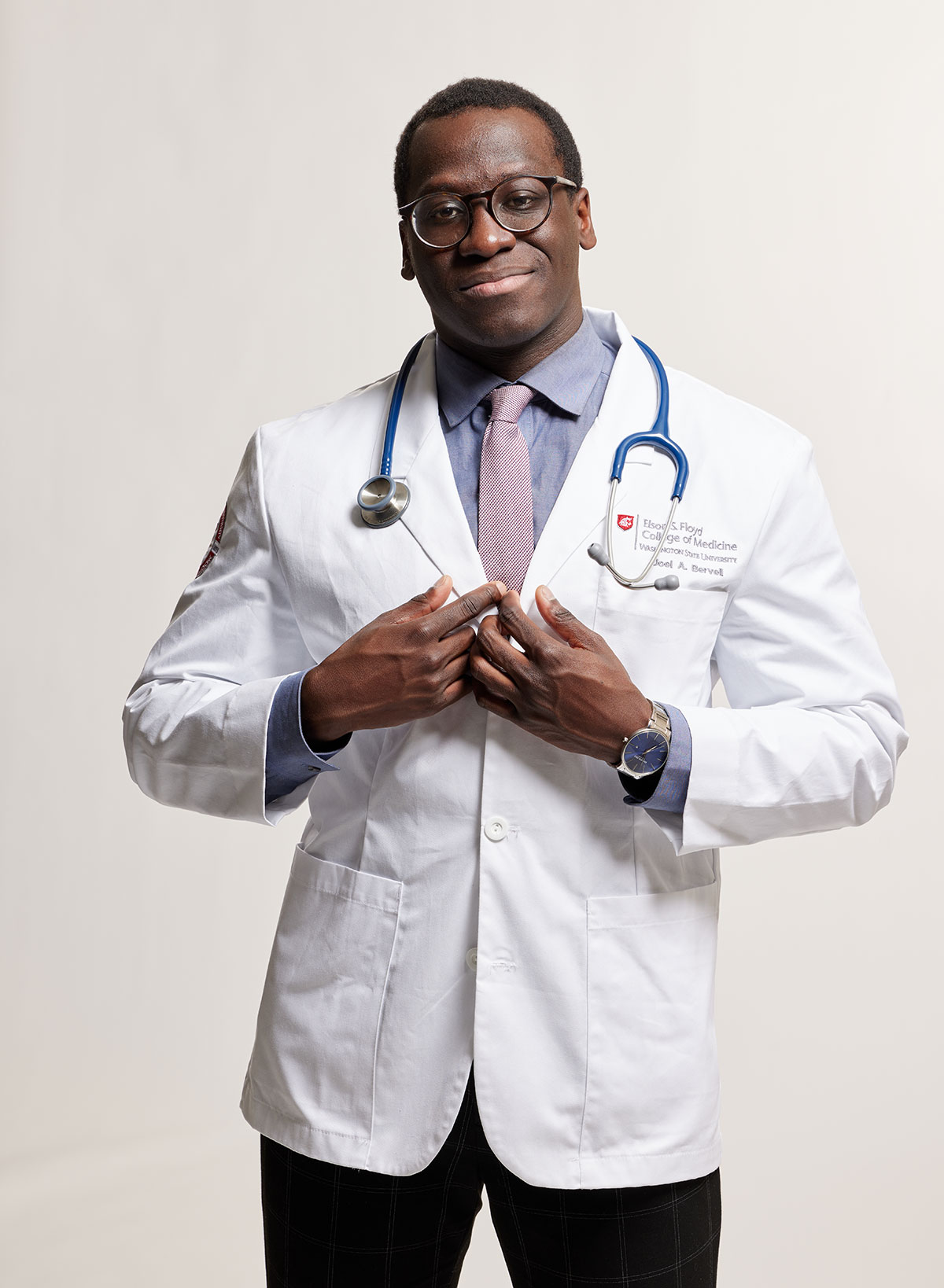
What’s one challenge you faced in your medical journey that changed how you approach patient care today?
One of the biggest challenges has been being “the only one” in so many spaces — the only Black medical student in a room, the only one asked to explain issues of race or bias. That isolation was difficult, but it also allowed me to see medicine differently. It made me aware of how many patients probably feel the same way: unseen, unheard, and expected to adapt to a system that wasn’t designed with them in mind.
That experience has shaped my approach to patient care profoundly. I no longer see a chart as the whole story; it’s just the beginning. Behind every lab value or physical exam finding is a patient whose health is influenced by where they live, the resources they have, and the history of how people like them have been treated in medicine. If we don’t take that into account, we’re not giving true care.
It’s also changed how I listen. Instead of just asking the standard questions, I try to leave space for patients to tell me about their lives in their own words. What barriers are they facing? What fears or mistrust do they bring into the room? My own journey taught me that care isn’t just about treating disease; it’s about recognizing dignity, context, and the humanity behind the diagnosis.
What advice would you give to students from underrepresented communities who might not see themselves reflected in traditional healthcare pathways?
My biggest advice is this: The thing that makes you feel like you don’t belong is actually your greatest asset. For too long, medicine has been taught and practiced through a narrow lens, and the result is a system full of blind spots. Your lived experience, whether it’s growing up in a community with limited access to care or navigating the healthcare system in ways others haven’t had to, is a form of expertise that medicine desperately needs.
I know how isolating it can feel when you don’t see yourself reflected in your professors, your classmates, or even in the case studies presented in class. Remember that by being here, you are making it easier for the next student to imagine themselves in your shoes.
Practically, I encourage students to find mentors who affirm them. They may not always look like you or share your background, but they can still advocate for you and remind you of your worth. Build community wherever you can, whether online or in person, because this path is hard to walk alone. Most importantly, don’t let anyone convince you that you don’t belong. The barriers are real, but so is your ability to change the field just by being in it.
Looking ahead, what excites you most about the future of healthcare, and what do you hope your voice continues to stand for?
I’m excited because I think we’re at an inflection point. For the first time, equity isn’t just a buzzword; it’s becoming a necessary foundation for how we think about care. From medical education to technology to policy, more people are asking, “Who is being left out? Who is not being seen? How do we fix that?” That shift gives me hope.
I’m also energized by how storytelling and technology are merging to drive change. Whether it’s through making videos on social media, children’s programming like my YouTube series “The Doctor Is In,” or leading policy conversations in Washington, there are new ways to make medicine transparent, accessible, and accountable.
Personally, I hope my voice continues to stand for truth and courage — truth in exposing the inequities and blind spots that persist in medicine and beyond, and courage in imagining a healthcare system that works differently, not just for some, but for everyone. At the end of the day, my goal is simple: to bridge knowledge with action, and to use whatever platform I must to make sure patients are seen, heard, and cared for with the dignity they deserve.
